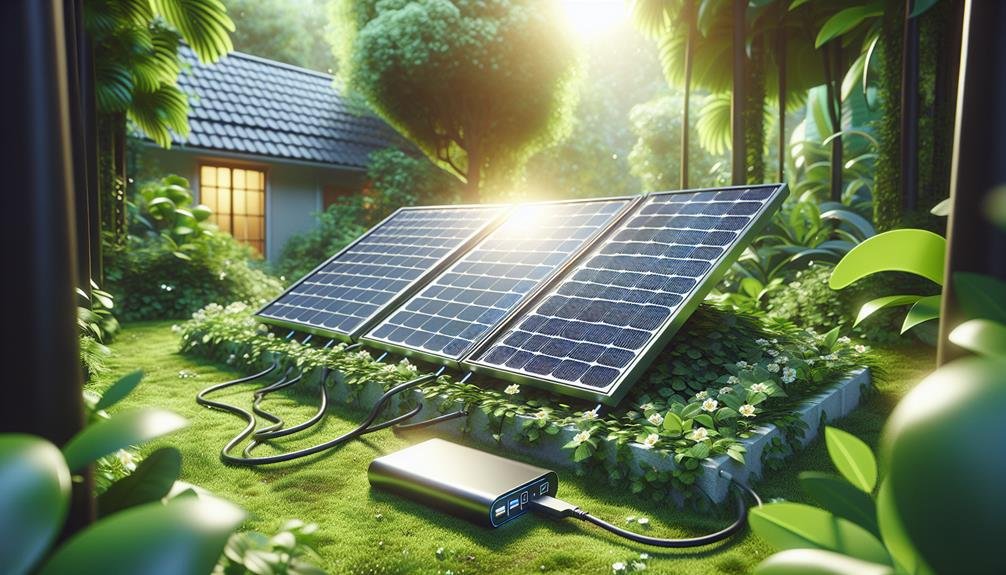

You can charge your power bank without its original charger by plugging it into a laptop’s USB port, making sure you use a high-quality USB cable. A USB 3.0 port is preferable due to its higher current rating (0.9 amps at 5 volts). Alternatively, use a car charger adapter; plug it into the cigarette lighter port, and make sure your car is on. Solar charging is another option; use high-efficiency, clean panels and place them in direct sunlight. Wireless charging works if both devices follow the same standard and are properly aligned. For detailed guidelines on these methods, keep exploring.
USB Port on Laptop
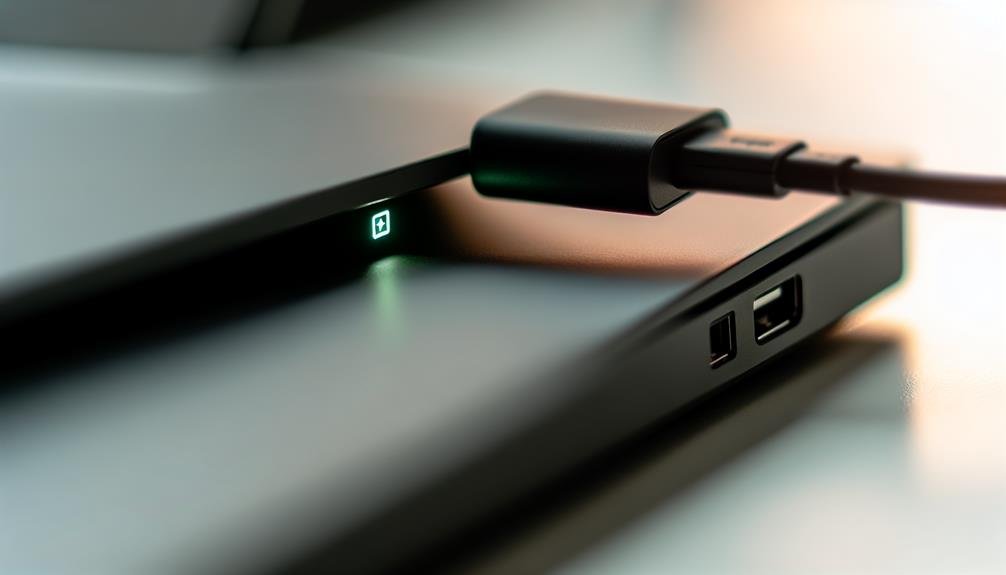
By connecting your power bank to a USB port on your laptop, you can charge it efficiently without the need for a separate charger. This method leverages the readily available USB power sources from your laptop, offering an alternative charging option that’s both convenient and practical. When considering laptop compatibility, make sure that your laptop’s USB ports support power delivery to external devices, as not all USB ports can provide sufficient power for power bank charging.
First, check your laptop’s specifications to confirm its USB ports’ output power ratings. Typically, USB 3.0 ports can deliver up to 0.9 amps at 5 volts, while USB 2.0 ports provide 0.5 amps at 5 volts. Higher current ratings mean faster charging times for your power bank. Use a high-quality USB cable to connect your power bank to the laptop, ensuring a stable connection.
It’s important to monitor the charging process to avoid overheating. Place your laptop and power bank on a flat, heat-resistant surface and ensure proper ventilation. Regularly inspect the connection and charging status to prevent any potential hazards. By following these guidelines, you can safely utilize your laptop as an efficient and alternative charging option for your power bank.
Car Charger Adapter
Another efficient alternative for charging your power bank without a traditional charger is using a car charger adapter. This method is particularly useful during extended road trips or urgent situations where standard charging options are unavailable. By utilizing the car’s cigarette lighter port, you can harness the vehicle’s electrical system to recharge your power bank effectively.
To begin, make sure your car charger adapter is compatible with your power bank. Most adapters come with USB ports, which should match the charging cable of your power bank. Plug the car charger adapter into the cigarette lighter port, and then connect your power bank to the adapter using the appropriate cable. Verify that the car is either running or in accessory mode to supply power to the adapter.
Safety is paramount when utilizing car charging solutions. Avoid overloading the car’s electrical system by not plugging in multiple high-power devices simultaneously. Additionally, verify that the car charger adapter is of high quality and has safety certifications to prevent potential hazards like overheating or short circuits.
Solar Charging
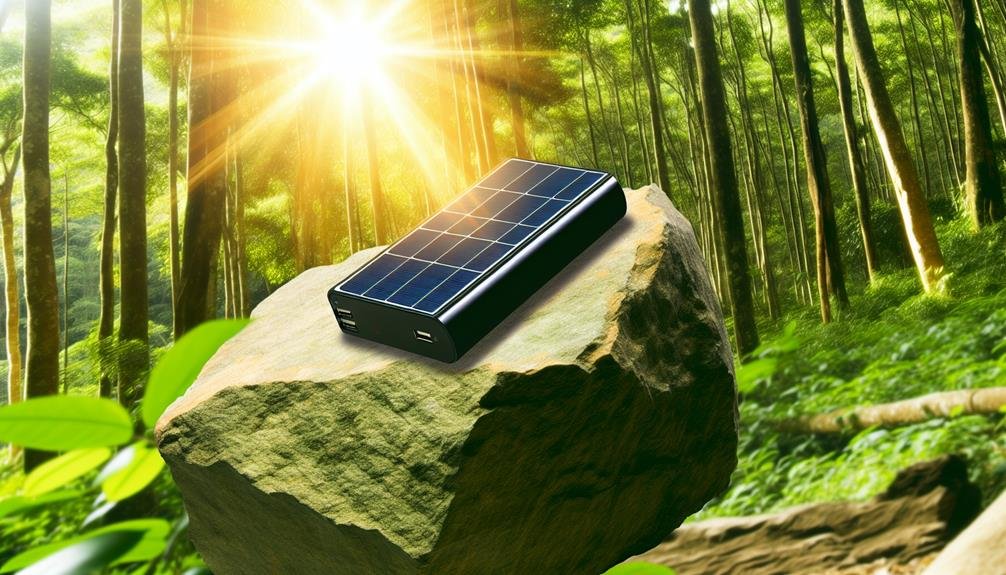
When considering solar charging, you need to evaluate the efficiency of the solar panel, the duration of sunlight exposure, and the practicality of portable solar chargers. Solar panel efficiency determines how effectively sunlight is converted into electrical energy. Additionally, the amount of sunlight your location receives will greatly impact the charging time required.
Solar Panel Efficiency
Solar panel performance, a critical element in solar charging, directly impacts how quickly you can recharge your power bank. Higher efficiency means more sunlight is converted into usable energy, optimizing both energy storage and battery life. To guarantee peak solar panel performance, regular maintenance is crucial.
Proper solar panel maintenance enhances energy storage and prolongs battery life. Here’s how you can maximize efficiency:
- Clean Panels Regularly: Dust and debris can greatly reduce power output. Use a soft cloth and mild detergent.
- Inspect for Damage: Cracks or wear can hinder energy conversion. Regularly check for physical damage and address it promptly.
- Position Correctly: Ensure your panels are angled towards the sun. Incorrect positioning can significantly reduce efficiency.
- Use Quality Components: Low-quality connectors and cables can lead to energy loss. Invest in high-quality components to maintain power output.
Maximizing solar panel efficiency not only ensures faster charging but also extends the lifespan of your power bank. By adhering to these practices, you enhance energy storage capabilities and maintain consistent power output, ultimately safeguarding your investment and ensuring reliable performance. Your attention to these details will help you harness solar energy safely and effectively.
Sunlight Exposure Time
Maximizing sunlight exposure time is crucial for efficient solar charging, as it directly correlates with the amount of energy your power bank can harvest and store. To achieve optimal outcomes, pay close attention to your power bank placement. Make sure it is positioned in a location that receives unobstructed sunlight for the maximum number of hours during the day. Avoid shaded areas, as even partial shading can notably reduce charging efficiency.
Equally important is the sunlight exposure angle. For the most effective charging, align the solar panel of your power bank perpendicular to the sun’s rays. This means adjusting the angle throughout the day to maintain direct exposure as the sun moves across the sky. Early morning and late afternoon sunlight is less intense, so midday positioning when the sun is at its highest will yield the best outcomes.
Monitor the temperature of your power bank during this process. Excessive heat can damage internal components, so make sure the device doesn’t overheat. Using a thermal-protective surface or cover can reduce this risk. Remember, a well-placed and correctly angled power bank will maximize energy absorption, ensuring a safer and more effective solar charging experience.
Portable Solar Chargers
Portable solar chargers offer a practical solution for harnessing renewable energy to power your devices on the go. These devices convert sunlight into electricity, which can then be used to charge a solar power bank. This process is particularly beneficial for emergency charging when traditional power sources are unavailable.
When considering a portable solar charger, it’s crucial to evaluate the following factors:
- Efficiency: Look for panels with high energy conversion rates. Monocrystalline panels typically offer better efficiency compared to polycrystalline ones.
- Portability: Make sure the charger is lightweight and compact, making it easy to carry during outdoor activities.
- Weather Resistance: Choose models that are durable and can withstand various weather conditions, including rain and dust.
- Compatibility: Confirm that the charger can connect with your solar power bank and other devices you plan to charge.
To maximize safety, always follow the manufacturer’s guidelines. Position the solar panels to receive optimal sunlight, and regularly check connections to prevent overheating. By taking these precautions, you can effectively utilize portable solar chargers for a reliable and eco-friendly energy source.
Wireless Charging
When considering wireless charging for your power bank, you’ll need to check for compatibility with Qi-enabled devices. Precise placement on the charging pad is essential to guarantee efficient energy transfer. Additionally, be aware that wireless charging speeds can be slower compared to traditional wired methods.
Wireless Charging Compatibility
Verifying that your power bank supports wireless charging is essential for smooth and efficient energy transfer without the need for cables. First, confirm that both your power bank and wireless charger follow the same wireless charging standard, such as Qi. Compatibility issues can arise if they don’t match, leading to reduced charging speed or even failure to charge.
Next, consider device positioning and convenience factors. Proper alignment between the power bank and the wireless charging pad is vital for best energy transfer. Misalignment can hinder charging efficiency and increase the time needed to achieve a full charge.
Here’s a checklist to ensure compatibility and safety:
- Standards Compliance: Confirm your power bank and charger both support the Qi standard.
- Charging Speed: Check for any manufacturer specifications on charging speed to avoid slower-than-anticipated performance.
- Device Positioning: Make sure the power bank has clear guidelines for alignment on the charging pad.
- Convenience Features: Some power banks offer built-in indicators to assist in proper positioning.
Device Placement Precision
Accurate device placement on the wireless charging pad is crucial to maximize charging efficiency and minimize energy loss. Positioning accuracy is vital, as misalignment can lead to inefficient energy transfer and increased heat generation. Make sure that your power bank’s orientation aligns perfectly with the designated charging area on the pad. Most wireless chargers feature alignment guides or magnetic positioning aids to help with this. If those are present, use them to achieve ideal placement.
Device compatibility also plays a significant role in charging performance. Always verify that your power bank supports the specific wireless charging standard (e.g., Qi) used by your charging pad. Incompatible devices may either not charge at all or could suffer from reduced efficiency and increased wear.
Surface conductivity is another important factor. The charging surface and the power bank should be kept clean and free of any obstructions. Dust, debris, or even a thick case can impair the conductive properties, leading to slower or incomplete charging cycles. Always place the power bank on a flat, stable surface to attain consistent contact and avoid potential safety hazards like overheating or electrical short-circuits.
Charging Speed Considerations
Several factors influence the charging speed of your power bank when using wireless charging technology. Primarily, the power bank capacity and voltage output are critical determinants. A higher capacity power bank, such as one with 20,000mAh, will naturally take longer to charge than a smaller one, like 5,000mAh, assuming the same charging conditions.
To optimize your wireless charging speed, consider the following:
- Alignment: Ensure accurate alignment between your power bank and the wireless charging pad. Misalignment can greatly reduce charging efficiency.
- Temperature: Keep both the power bank and wireless charger in a cool environment. Overheating can slow down the charging process and potentially damage the devices.
- Charger Quality: Use a high-quality, certified wireless charger. Lower-quality chargers might not deliver consistent voltage output, leading to slower charging speeds.
- Interference: Minimize any objects or materials between the power bank and the charging pad. Foreign objects can cause interference, reducing charging efficiency.
Use a Power Strip
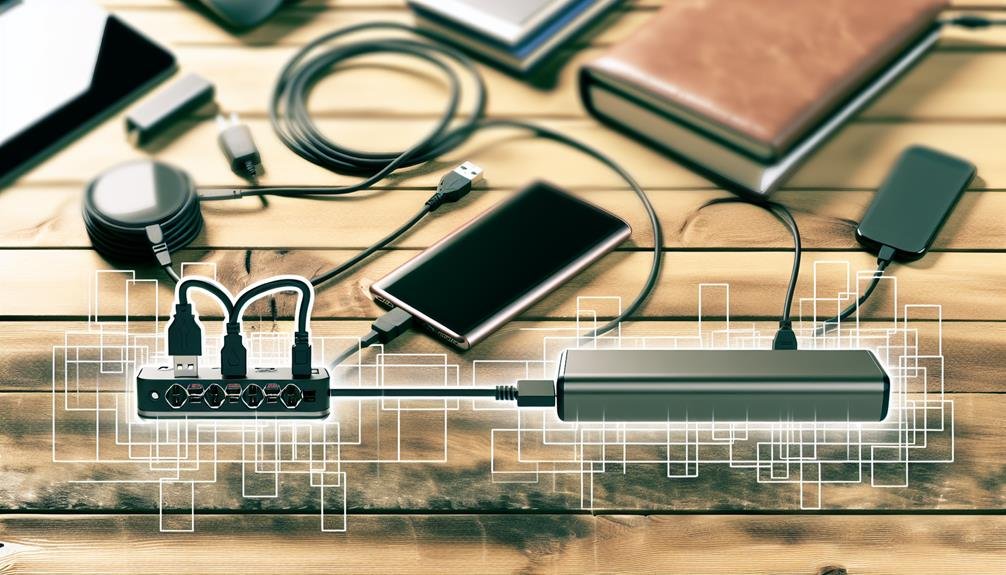
Utilizing a power strip allows you to charge your power bank efficiently by providing multiple outlets for various devices simultaneously. This method not only enhances outlet availability but also maximizes power consumption. When selecting a power strip, make sure it has built-in surge protection to safeguard your devices from voltage spikes. This is vital for maintaining the longevity of your power bank and other connected electronics.
Evaluate the power bank capacity and the energy efficiency of the power strip. High-capacity power banks demand more energy, so it’s important that your power strip can handle the combined load of all devices plugged into it. Overloading the strip can lead to overheating or even fire hazards. Always refer to the power ratings specified by the manufacturer and make sure they align with your needs.
For best safety, choose a power strip with an automatic shut-off feature. This will prevent excessive power consumption and potential damage. Additionally, periodically inspect the power strip for wear and tear, especially if it’s used frequently. Faulty strips can compromise safety and efficiency. By following these guidelines, you’ll achieve a safe, efficient charging setup for your power bank and other devices.
Portable Generator
In situations where traditional power sources are unavailable, a portable generator can provide a reliable means to charge your power bank. This method is particularly useful during emergency situations, guaranteeing you have backup power when it’s needed most. Portable generators are also ideal for outdoor activities where access to electricity is limited.
When using a portable generator, follow these steps to secure safe and efficient charging:
- Select the appropriate generator: Validate the generator’s output matches the power bank’s input requirements. Check the voltage and wattage specifications.
- Connect safely: Use a compatible cable to link your power bank to the generator. Secure all connections to avoid any short circuits or disconnections.
- Operate in a safe environment: Place the generator on a flat, stable surface away from flammable materials. Ensure good ventilation to prevent carbon monoxide buildup.
- Monitor charging: Regularly check the power bank’s charging status. Disconnect once fully charged to avoid overcharging, which can damage the battery.
Using a portable generator offers a practical solution for maintaining portable energy during unforeseen circumstances. Always prioritize safety by following manufacturer guidelines and taking necessary precautions. This secures that your power bank is charged efficiently and safely, providing you with essential power when you need it most.
Hand-Crank Charger

A hand-crank charger offers a manual, yet effective, method to power your bank in situations where electricity is inaccessible. This device leverages mechanical energy, which you generate by turning a crank, converting it into electrical energy. It’s a reliable source of portable energy, especially useful during emergencies or outdoor activities where renewable power is essential.
To use a hand-crank charger safely, make sure that the device is stable and securely connected to your power bank. Most models include a USB port that fits standard power banks. Begin cranking at a steady, moderate pace. Rapid cranking can produce inconsistent voltage, potentially damaging your power bank. Aim for a consistent rotation speed to maintain a stable energy flow.
It’s important to monitor the temperature of both the hand-crank charger and the power bank. Overheating can be a sign of excessive strain and may indicate it’s time to pause and let the devices cool down. Regular breaks during extended cranking sessions can prevent overheating and prolong the lifespan of both devices.
This method doesn’t produce a large amount of energy quickly, but it’s a dependable and renewable power source when other options are unavailable.
Public Charging Stations
When you’re in urban areas, public charging stations provide a convenient solution to recharge your power bank without requiring a personal charger. These stations are increasingly common in places like airports, cafes, and libraries. They offer an efficient way to access emergency power when your devices are running low.
Public charging stations typically offer multiple USB ports and sometimes even wireless charging pads. Here’s a precise approach to safely use these facilities:
- Inspect the Station: Always check for any signs of tampering or damage. This guarantees you’re not risking your device or personal data.
- Use Your Own Cable: Bringing your own cable minimizes the risk of using potentially compromised public equipment.
- Battery Sharing Apps: Some stations support battery sharing services, allowing you to rent a charged power bank temporarily.
- Monitor Your Device: Never leave your device unattended. This lessens risks related to theft or unauthorized access.
Frequently Asked Questions
Can I Charge a Power Bank Using Another Power Bank?
You can’t charge a power bank using another power bank directly. Instead, consider using solar panels or charging through wireless charging. Both methods guarantee safety and efficiency without risking potential damage or inefficiency.
Is It Safe to Charge My Power Bank Overnight?
Don’t worry, charging your power bank overnight isn’t generally unsafe. However, for best battery health and safety, avoid making it a regular habit. Continuous overnight charging can introduce risks and degrade your battery’s lifespan.
How Long Does It Take to Fully Charge a Power Bank?
Your power bank’s charging speed and capacity determine the best charging time. Generally, it takes 4-8 hours. Make sure you’re using a compatible charger to maintain safety and efficiency. Don’t exceed recommended charging durations to avoid overheating.
Can I Charge a Power Bank With a Power Outlet Timer?
You can use a power outlet timer, but it’s not ideal due to power outlet timer limitations. Instead, consider alternative charging methods like using a USB port on your computer or a solar charger for safer, consistent results.
Will a Damaged USB Cable Affect Charging Efficiency?
Think of a damaged USB cable as a leaky pipe; it can seriously affect charging efficiency. USB cable compatibility is essential, as a faulty cable might impact battery life, leading to potential safety risks and reduced performance.
References
- https://www.lifewire.com/how-to-charge-a-power-bank-without-a-charger-5198828
- https://www.sciencedirect.com/science/article/pii/S235197891730094X
- https://en.wikipedia.org/wiki/Power_bank
- https://www.electronics-tutorials.ws/io/io_9.html
- https://www.energystar.gov/products/energy_star_guide_power_banks
- https://www.nbcnews.com/technology/personal-technology/how-charge-your-power-bank-without-charger-n1264043